Learn more about the Housekeeper profession in detail: routine, advantages, etc
The profession of a Housekeeper is often seen as a cornerstone of hospitality and residential services. This role encompasses a variety of tasks that are essential for maintaining cleanliness, organization, and comfort in various environments.
Ads
From hotels to private residences, the Housekeeper plays a vital role in ensuring spaces are not only clean but also welcoming and functional.
*You will remain on our website.*
The profession of a Housekeeper is often seen as a cornerstone of hospitality and residential services. This role encompasses a variety of tasks that are essential for maintaining cleanliness, organization, and comfort in various environments. From hotels to private residences, the Housekeeper plays a vital role in ensuring spaces are not only clean but also welcoming and functional.
What does a Housekeeper do?
Housekeepers are integral to maintaining cleanliness and orderliness in various environments, including hotels, resorts, and private residences. Their responsibilities encompass a wide range of tasks essential for ensuring spaces are not only clean but also welcoming and functional.
In hotels and resorts, Housekeepers are primarily responsible for cleaning and preparing guest rooms. This involves:
- Cleaning Tasks: Performing thorough cleaning of rooms, including dusting, vacuuming, mopping floors, and wiping down surfaces to ensure a pristine appearance.
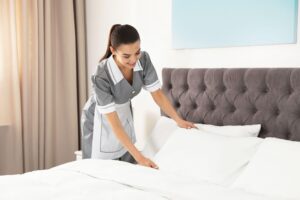
- Bed Making: Making beds with fresh linens and ensuring they are neatly arranged according to established standards.
- Bathroom Care: Cleaning and sanitizing bathrooms, including scrubbing sinks, toilets, and showers to maintain hygiene.
- Restocking Supplies: Checking and replenishing amenities such as toiletries, towels, and linens to ensure guests have everything they need.
- Room Inspections: Conducting inspections to ensure rooms meet quality standards before guests arrive.
In residential settings, Housekeepers often perform additional tasks tailored to the needs of their employers. These may include:
- Laundry Duties: Washing, drying, folding, and ironing clothes and linens.
- Meal Preparation: Assisting with meal preparation and kitchen clean-up as required.
- Organization: Organizing closets, pantries, and other household areas to maintain order.
Housekeepers also play a role in maintaining public areas such as lobbies, corridors, and lounges in hotels, ensuring these spaces are clean and presentable for guests.
Interpersonal skills necessary to be a good professional in the field
To excel as a Housekeeper, certain interpersonal skills are crucial. Effective communication is essential for understanding specific cleaning preferences or requirements, especially in private residences where personalization is key. Attention to detail ensures that every task is completed to the highest standard, leaving no corner untouched. Time management skills help in efficiently completing tasks within designated timeframes, whether in a fast-paced hotel environment or managing multiple household chores.
To excel in the role of a Housekeeper, several skills are essential:
- Attention to Detail: Ensuring every task is completed meticulously to meet high cleanliness standards.
- Time Management: Efficiently organizing tasks to complete them within specified timeframes.
- Communication: Effectively communicating with guests or homeowners to understand preferences and requirements.
- Physical Stamina: Ability to perform physical tasks such as lifting, bending, and standing for extended periods.
- Adaptability: Flexibility to adjust cleaning routines based on specific needs or changes in scheduling.
How to start a career as a Housekeeper?
Starting a career as a Housekeeper typically begins with gaining practical experience and developing relevant skills. Many professionals start by working in entry-level positions in hotels, resorts, or cleaning companies. Some choose to pursue formal training programs or certifications in hospitality management or cleaning services to enhance their skills and career prospects. Building a strong reputation for reliability, trustworthiness, and meticulousness is crucial for advancing in this field.
What are the advantages of working as a Housekeeper?
Working as a Housekeeper offers several advantages that appeal to individuals seeking a stable and fulfilling career:
- Job Stability: The demand for Housekeepers remains consistently high in both hospitality and residential sectors, providing stable employment opportunities.
- Flexibility: Depending on the employer, Housekeepers may enjoy flexible work schedules, accommodating various personal commitments.
- Skill Development: The role of a Housekeeper allows individuals to develop practical skills in cleaning, organization, and time management, which are transferable to other professions.
- Career Progression: Experienced Housekeepers can advance to supervisory roles or transition into related fields such as facility management or hospitality operations.
- Rewarding Work: Many Housekeepers find satisfaction in transforming spaces and contributing to the comfort and well-being of guests or residents.
Conclusion
In conclusion, the profession of a Housekeeper encompasses much more than cleaning. It requires a blend of technical skills, interpersonal abilities, and a strong work ethic. Whether in hotels, resorts, or private homes, Housekeepers play a crucial role in maintaining cleanliness and enhancing the overall experience of guests and residents. The job offers stability, opportunities for skill development, and the satisfaction of contributing to a welcoming environment. For those considering a career in hospitality or residential services, becoming a Housekeeper can provide a fulfilling and rewarding path with potential for growth and advancement.
SEE MORE: